
Blastocyst Culture and Transfer
Just like technologies, IVF treatment is also transforming to give the best results to people. From growing embryos in the lab to cultivating them in the form of a blastocyst to transfer them into the womb has improved the outcomes. This comes with the success chances of 50% to 60%, but you have to follow the instructions and ensure to have a healthy life.
In Parihar IVF, we always focus on delivering the best results to our patients. But there is a catch in blastocyst culture and transfer. This gives more successful chances when there is are good number of embryos present on the 2nd or 3rd day.
What is blastocyst culture?
In the early embryo development phase, this stage occurs about 5 to 6 days after fertilization. Under the laboratory procedure of IVF, the expert develops the embryo for an extended period, so that it can reach to blastocyst stage, and is ready to transfer to the uterus.
Step-by-step process
Let’s break down the steps for you-
Day 0: This is the day of Egg Retrieval Process, and doctors are recommended to avoid consuming anything before the procedure and not to wear any jewelry. Also, make sure to take adequate rest prior to the egg retrieval to balance hormones, overall health, and the quality of the eggs.
Day 1: This is the Pronuclear Stage, where embryologists examine the fertilized eggs to determine the success chances.
Day 2: This is the stage where fertilized eggs undergo their first cell division (two to four cell stage). This is the rapid cell division called cleavage, which is crucial for blastocyst formation.
Day 3: the number of cells plays an important role, and the grade of the embryo is totally dependent on cell appearance. The embryo, which is properly cleaved, is considered the best one, which typically contains 6 to 10 cells.
Day 4: This morula stage is when the embryo transfers into a solid ball containing 16 to 32 cells. Some IVF clinics prefer this stage to transfer the embryo rather than waiting to become a blastocyst.
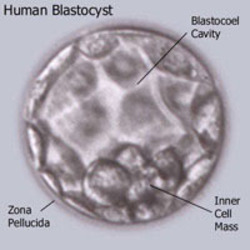
Day 5 or 6: When the embryo is completely grown into the form of blastocysts after fertilizing for 5 days, it is ready to transfer. This formation contains a fluid-filled cavity carrying different types of cells, like the inner cell mass being the one which will become the fetus, while the trophectoderm will form the placenta.
Now the strongest blastocysts are carefully placed inside the uterus using a thin catheter. And after 10 to 12 days, doctors recommend conducting a pregnancy test to know the results. For assurance, it is better to visit your doctor, so that they can testify to the outcomes.
Who are the appropriate candidates for blastocyst transfer?
The process is considered a good option for people under 35 having healthy fallopian tubes and uterus. Couples who have had prior failed IVF can opt for this treatment. Blastocyst culture provides an opportunity for the donor to analyze the irregularities or issues.
On the other side, genetic disease is one of the major which restricts couples from becoming parents. With the help of embryo biopsy, a procedure is conducted under Preimplantation genetic diagnosis, where the genetic analysis is performed. After that, only the healthy embryo is transferred into the uterus, reducing the possibilities of genetic disease.
Sometimes in IVF, a number of embryos are transferred, resulting in multiple pregnancies. And not everyone wants to have multiple pregnancies at the same time. While in blastocyst culture, single embryo transfer is available, reducing the issues.
Role of blastocyst culture
First of all, it will increase your chances of implantation and remove the process of fertilization in the uterus. After creating an embryo, the fertility expert directly placed it inside the uterus.
After analyzing all the factors, the embryo is transferred. This reduces the chances of multiple birth, obstetric complications, and provides the result with higher success rate.
Although a single embryo is transferred in a treatment. So, this gives you an option of preserving your embryo for future perspective. It automatically minimizes the load of going through the whole process over again.
Meet our expert
Dr. P.K. Parihar- Director
The scientific director of Parihar IVF has 15 years of experience in treating and counseling couples.
Dr. Deepak Jain- Sonologist
His area of expertise is sonology, which makes the couple aware of their status, to achieve positive results.
Dr. Devendra Gaur- Anesthetist
He is a well-known anesthesiologist in Ajmer and works as a key player in infertility therapy. His field of expertise involves pain management and short-acting anesthesia.
Dr. D.K. Gupta- Anesthetist
He specializes in short and ultra-short-anesthesia, which supports fertility specialists in applying the treatment appropriately.
Sangeeta Parihar- Embryologist
A trained and qualified embryologist’s job is extremely crucial in IVF treatment. She is experienced in this area and is assisting several couples through her expertise.
G.S. Jodha- gynecologist
His areas of expertise are fetal medicine and assisting mothers from conception through delivery.
Why choose us?
Parihar IVF has a vision to deliver excellence in fertility treatment with a compassionate attitude. We have gynecologists, embryologists, anesthesiologists, and specially skilled professionals who provide personalized treatment for blastocyst culture and transfer. We concentrate on comprehensive care so that the patients can be psychologically and emotionally transformed through the process. Through diligent examination of medical histories and consultation with the patient, we attain the highest success rates through treatment by adopting state-of-the-art fertility technologies. Our attention extends beyond medical interventions; our services extend as far as holistic counseling and assistance, keeping patients in the know and empowered. We address each fertility experience with scientific acuity and individual attention, ensuring every process is effortless and successful.
Start your journey with us.
It increases the chances of implantation in comparison to the earlier stages of the embryo. Even doctors also stated that it offers a higher pregnancy rate, reduces the risk of multiple birth, and increases the opportunities for cryopreservation. Our expert team will help to ensure that you will get the best results by synchronizing the uterine lining and minimizing the risk of multiple pregnancy. Also, the success rate is higher, which is the biggest plus point you can get.